product designer • Caravelo • web • 2025

subscription management
Turning a legacy subscription platform into a scalable, self-service B2B product.
Components reused from Veloair, the B2C design system
User interviews & contextual inquiries
External tools replaced by in-platform workflows
Support tickets in the first 6 months
tl;dr
Caravelo’s Subscription Management Platform had grown without dedicated design ownership, leaving fragmented workflows, inconsistent UI, and a heavy reliance on support tickets and external tools — to the point where Caravelo’s own ops team was acting on behalf of airline partners. I led its redesign into a self-service B2B product: reworking the information architecture around user goals, bringing core subscription actions into the platform, and building on Veloair, the B2C design system, to create a scalable foundation. Three external tools were replaced, and support tickets dropped by 27% in the first 6 months.
overview
Caravelo powers subscription programmes for airlines. Its Subscription Management Platform is the back-office tool used to manage subscribers, plans, payments, and day-to-day operations.
It has two groups of users: airline partner teams, and Caravelo’s own operations team. The second group only existed because the platform lacked self-service capabilities — Caravelo’s team routinely had to perform actions on partners’ behalf.
The goal
Transform the platform into a self-service experience that increases user autonomy, while establishing a scalable design foundation for future growth.
problem
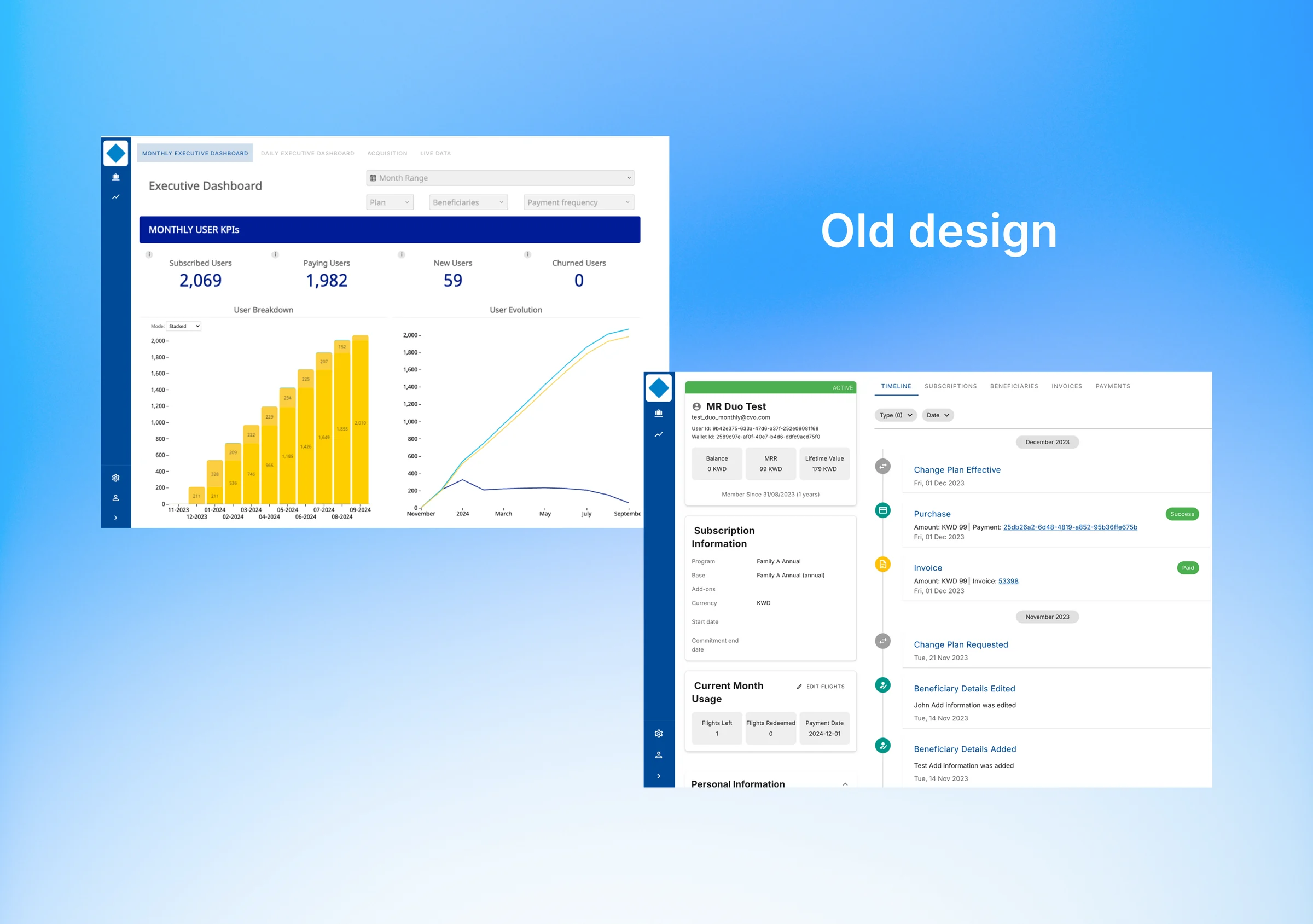
I audited the platform through heuristic evaluation and contextual inquiry, and ran a competitive analysis of leading SaaS platforms to understand where it was falling short.
- Fragmented experience — users relied on external tools like Kaui, Kill Bill, and Jira to complete core workflows, adding inefficiency and cognitive load.
- Low autonomy — many actions required support intervention, reducing visibility and slowing down operational tasks.
- Poor scalability — inconsistent, one-off Vue components made the platform hard to maintain and expand.
- Market gap — leading SaaS platforms prioritised integrated self-service experiences and streamlined task completion.
discovery
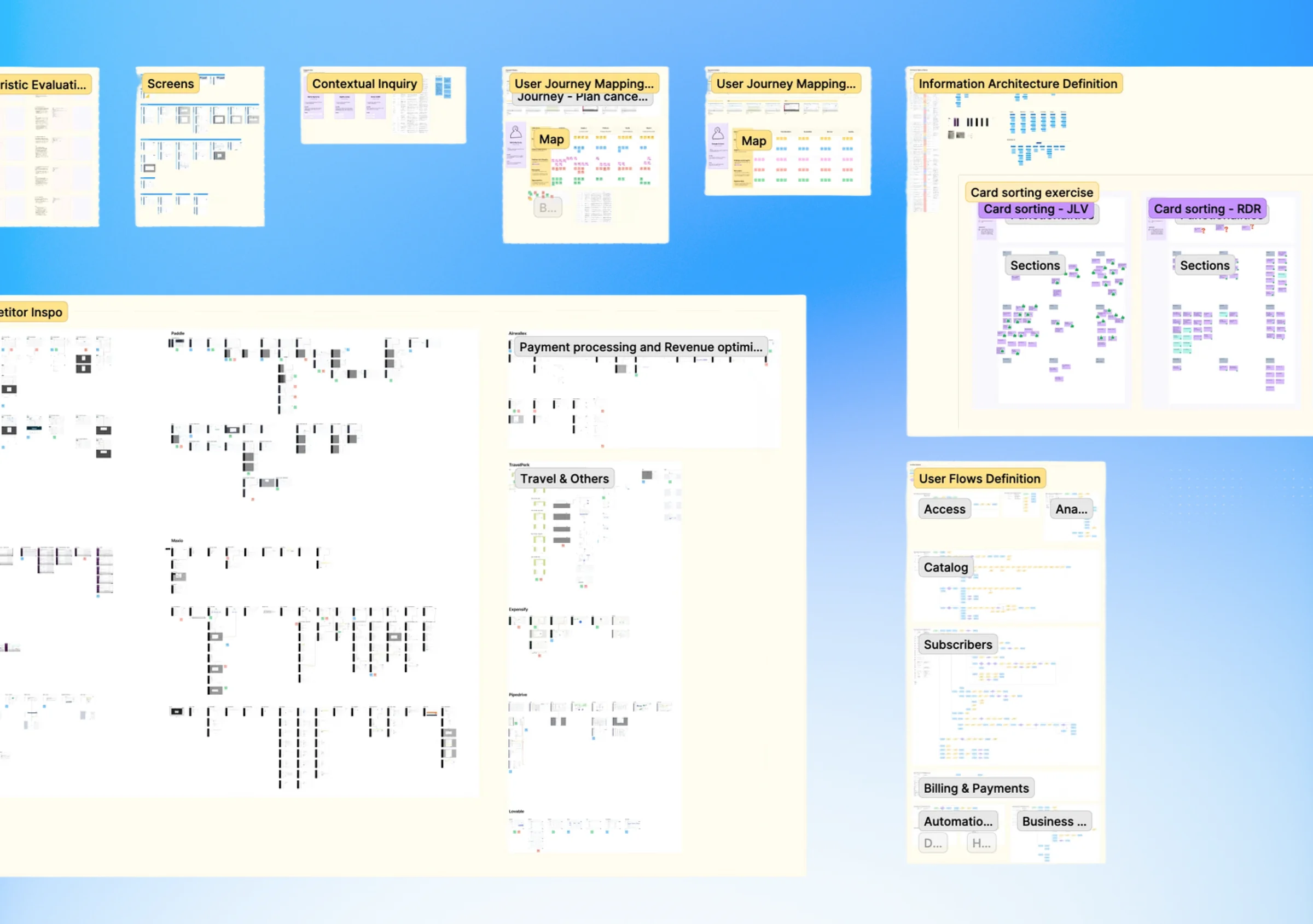
I led the design end to end alongside PMs and engineers. I ran 6 interviews and contextual inquiries — 3 with Caravelo’s internal team and 3 with airline partner clients — which revealed recurring frustration around fragmented workflows and lack of control. I synthesised the findings into journey maps, capability clusters, and a revised information architecture, redefining navigation around user goals rather than legacy system logic.
Hypothesis: autonomy scales better than support
Every action that needs a support ticket is a bottleneck for partners and a cost for Caravelo. Giving users integrated, self-service workflows reduces operational load, improves visibility, and makes the platform easier to scale to new airline partners.
design decisions
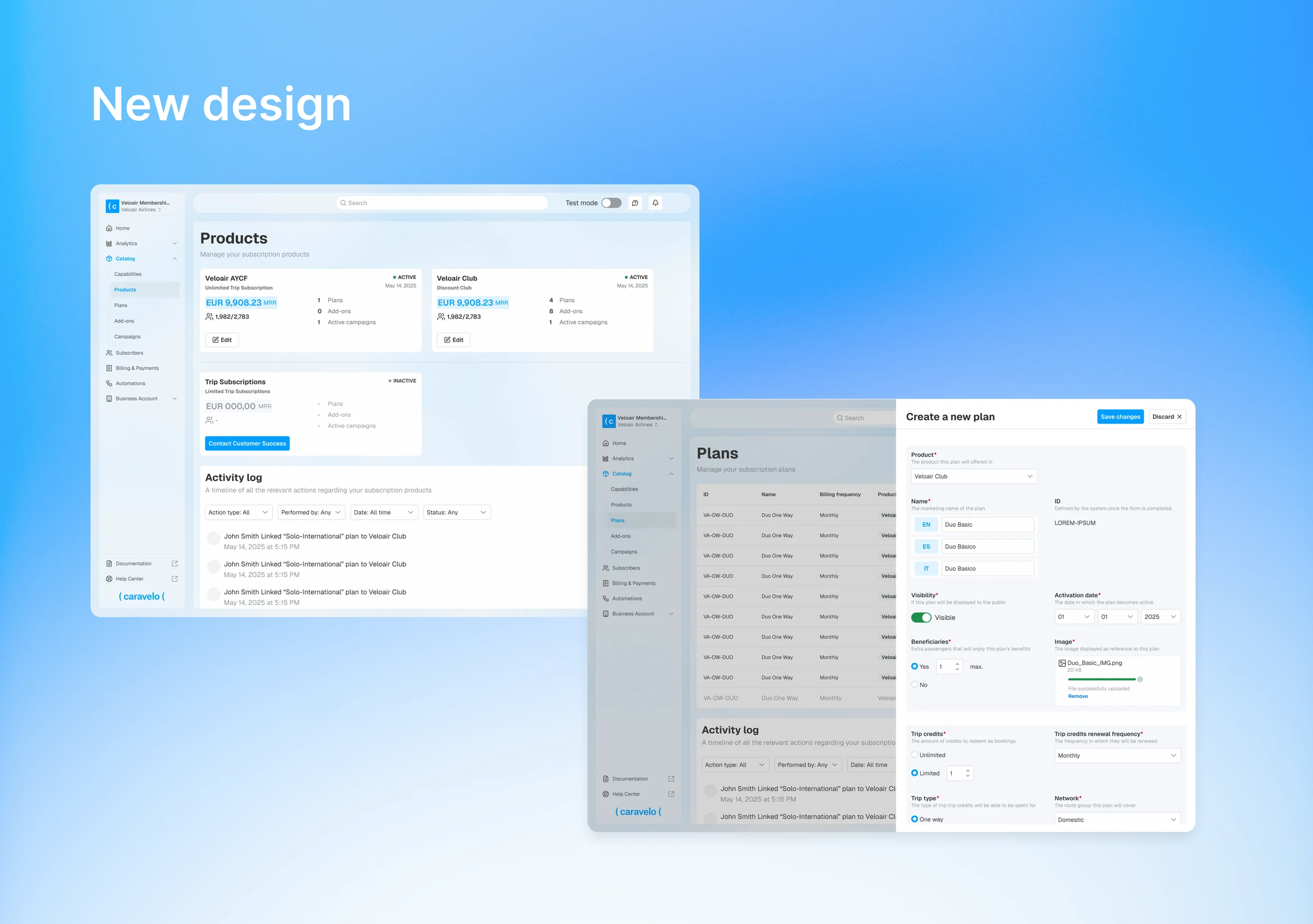
One principle guided everything: organise the platform around what users need to do, not how the system was built.
-
Navigation built around user goals
The reworked information architecture simplified navigation and reduced workflow complexity, replacing structures that mirrored legacy system logic.
-
Core actions, in one place
Streamlined flows let users complete subscription actions directly in the platform, replacing Kaui, Kill Bill, and Jira for day-to-day work.
-
Self-service by default
New self-service capabilities let airline partners handle key workflows themselves, instead of relying on Caravelo’s ops team to act on their behalf.
-
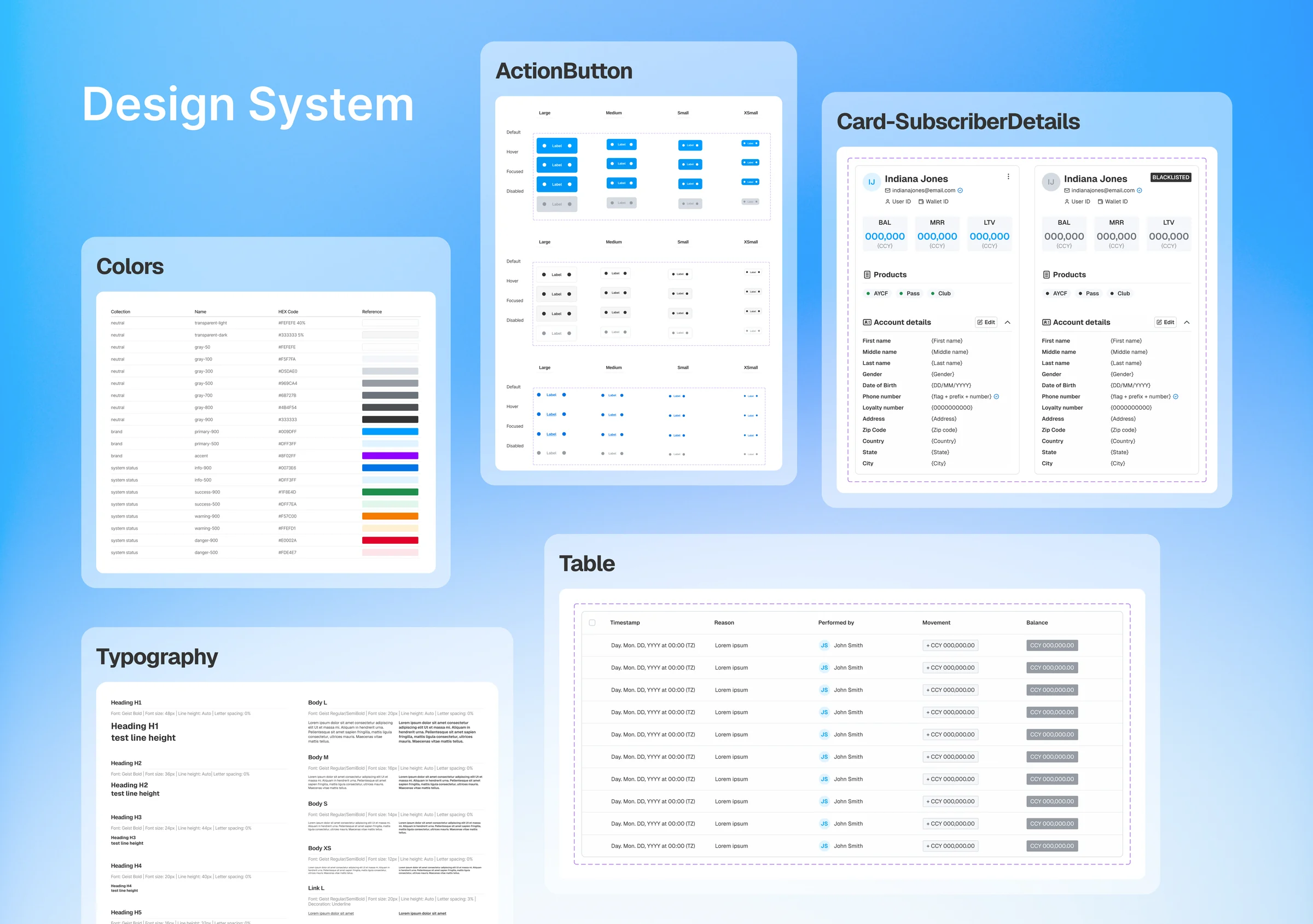
Building on what already existed
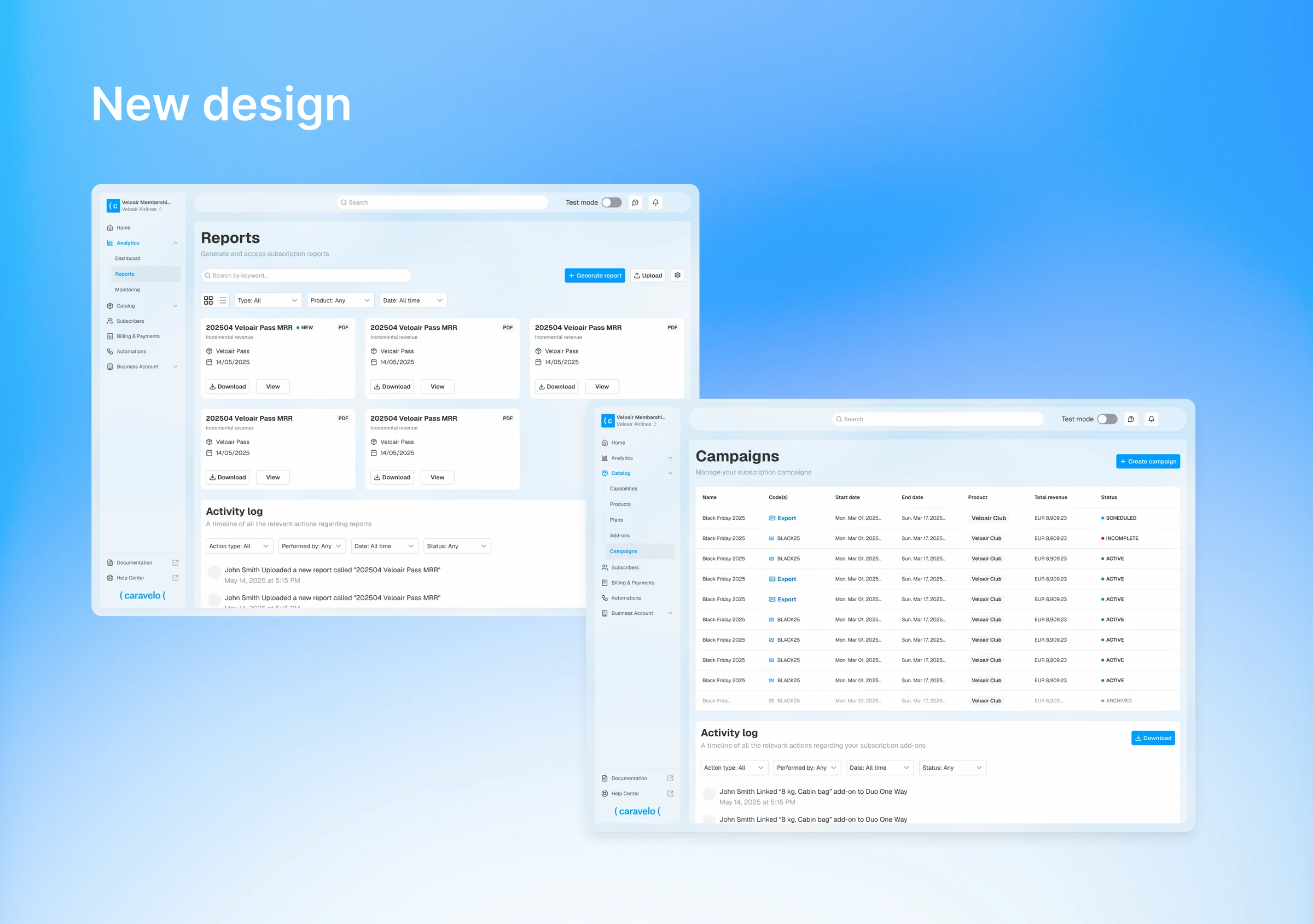
I audited existing components and extended Veloair, Caravelo’s B2C design system, to the platform, reusing 48 of its 70 components and adding the B2B-specific patterns it was missing.
-
Designed for implementation
High-fidelity interfaces were shaped around technical and integration constraints, so they were developer-ready from the start.
validation
Designs were reviewed with the same internal team members and airline partner clients from the initial interviews, alongside ongoing critiques with PMs and engineers, keeping decisions grounded in both user value and feasibility.
-
Payments & billing
Support teams needed to check transactions and documents side by side when helping customers. → We merged payments and billing into a single section to make customer support more efficient.
-
Chargebacks
Bringing chargeback flows into the platform proved too complex for the scope. → Instead, we embedded the existing tool (Stripe) within the internal platform, so users could still handle them without leaving it.
challenges & trade-offs
-
Legacy architecture
Existing technologies constrained interaction patterns and slowed iteration. Rather than designing idealised experiences, I worked closely with engineers to balance usability improvements with what could realistically be built.
-
Third-party integrations
Several workflows depended on API integrations, which brought technical complexity and shifting requirements. Continuous collaboration with engineering helped align scope, validate feasibility, and adapt designs without compromising core user goals.
impact
-
Less support dependency
Support tickets dropped by 27% in the first 6 months, as self-service capabilities shifted key workflows away from Caravelo’s ops team and gave partners more visibility and control.
-
Core actions, in-platform
Users could complete core subscription actions directly in the platform, replacing 3 external tools.
-
A scalable foundation
Extending the design system improved consistency and sped up product development going forward.
see other projects
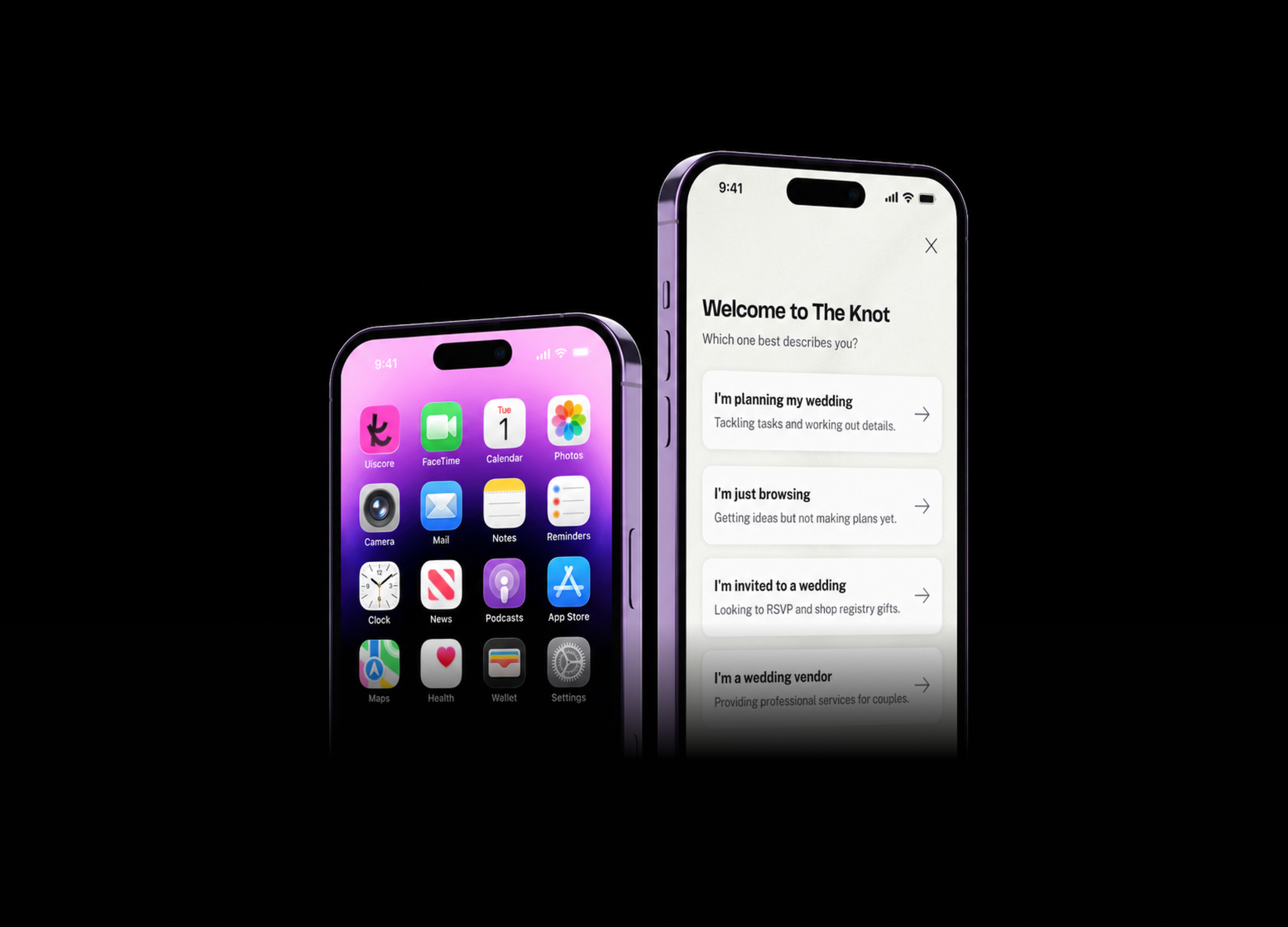
couple onboarding
See project →
travel search component
See project →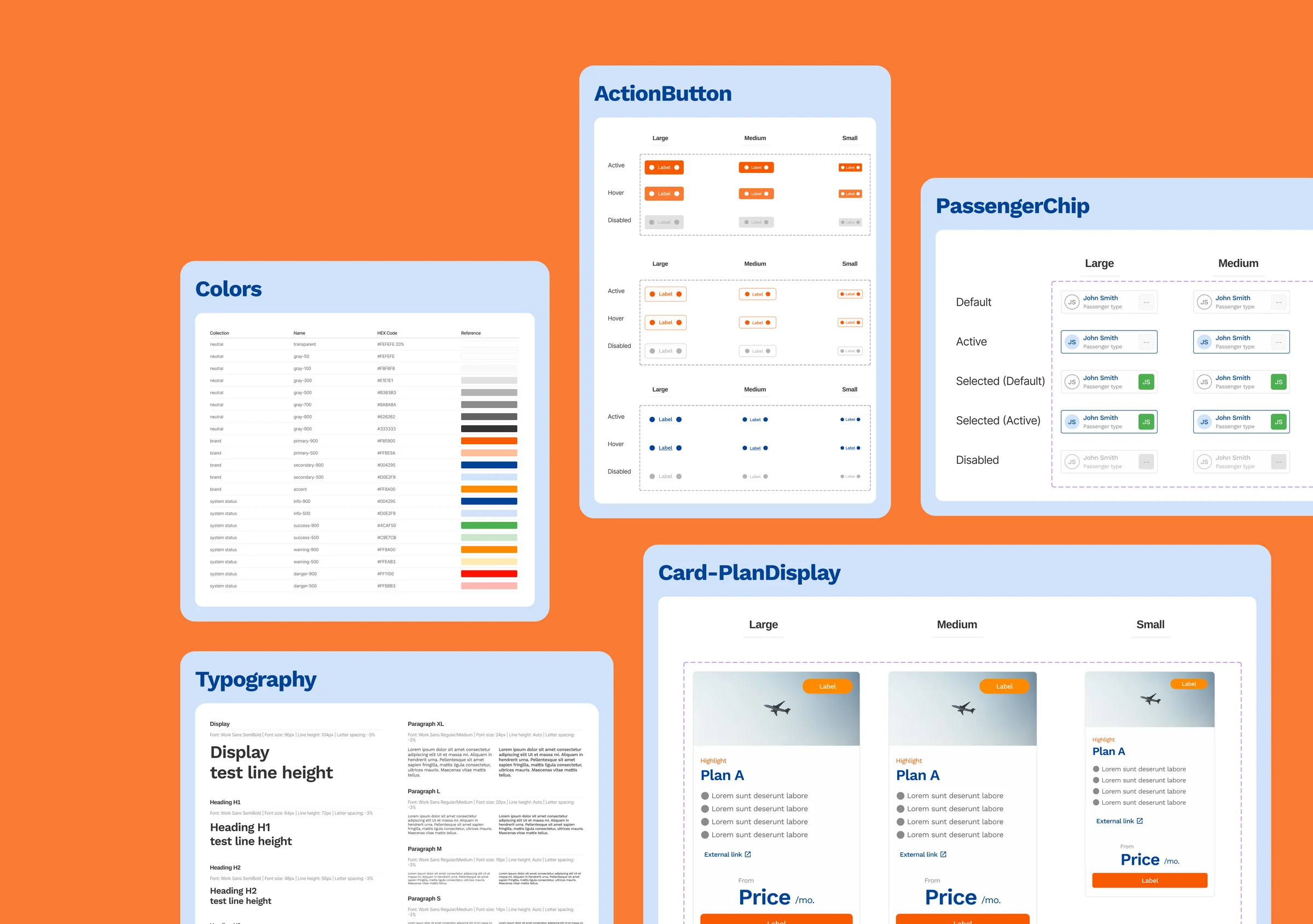
multi brand design system
See project →want to connect?
whatsapp, email, or linkedin — whatever's easiest for you